
A first-timer's guide to booking your first wellness retreat
By Leo Osei · Updated 2026-07-27

A first wellness retreat can feel like a bigger decision than it needs to be. This is due in part to the range of options and unfamiliar terminology, which can make it difficult to know where to start. Here is a clear and simple path through the decisions that matter.
Step one: pick an experience type before choosing a specific retreat
We recommend choosing what kind of experience you want. A spa or wellness retreat is ideal for general relaxation with a light structure. A yoga or meditation retreat suits people who want a gentle daily rhythm and some structure without the intensity. A detox or medical program suits a specific health goal and may require more preparation and, in some cases, medical clearance. Picking the category first narrows the decision considerably.
Step two: set a realistic length and budget
Three to four nights is a reasonable starting length for a first retreat. It gives enough time to settle in and unwind without requiring a large chunk of time off work or a high upfront cost. You can always book a longer stay next time once you understand what suits you.
What to expect once you book
| Stage | What typically happens |
|---|---|
| Booking | Deposit paid, health or dietary questionnaire sent |
| Before arrival | Packing list, arrival instructions, sometimes a pre-arrival call |
| Check-in | Orientation, facility walkthrough, treatments or sessions confirmed |
| During your stay | A mix of scheduled activities and open time |
| Departure | Checkout, sometimes a wellness plan or follow-up suggestions to take home |
What to pack
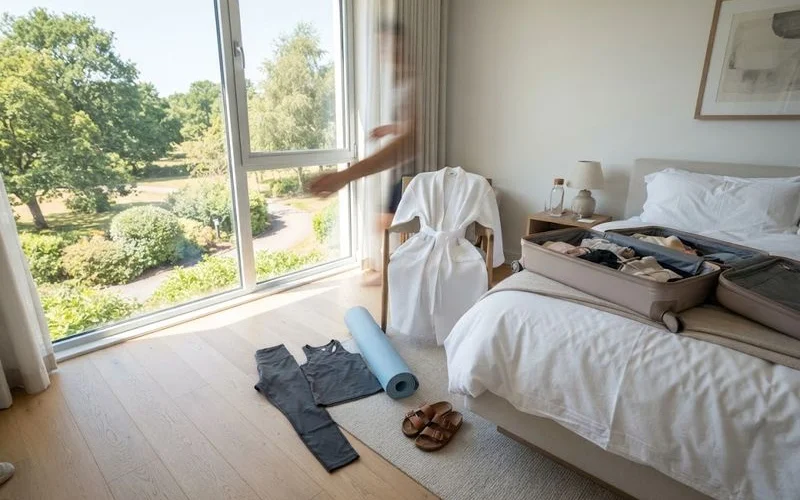
Comfortable, loose clothing works for most retreat activities, and swimwear is recommended if a pool or hydrotherapy facility is available. Bring any medication you take regularly, and a journal if reflective or quiet time appeals to you, as some people can find unstructured moments harder to sit with. Leave excess electronics and work materials behind if you can; the retreats people report getting the most out of are the ones where they can actually disconnect.
Managing first-timer nerves
It is common to feel unsure about the pace, the other guests, or whether you are “doing it right.” In practice, most retreats are built around welcoming a wide mix of first-timers and repeat guests, and staff expect to explain things as you go and don’t assume you have prior experience. If a session or activity doesn’t suit you, it’s normal to sit one out or ask for an alternative.
Setting expectations for the outcome
A single retreat is unlikely to permanently transform your habits or stress levels on its own, and it helps to go in without that pressure. What most first-timers report getting out of a retreat is a genuine reset: a few days of solid rest, some new habits worth trying, and a clearer sense of what kind of retreat, if any, they’d want to return to.
Reading reviews the right way as a first-timer
With no prior experience of your own to compare against, reviews carry more weight for a first booking than they might on a repeat stay. Look for patterns across different reviews instead of fixating on the single best or worst one you find, and pay attention to comments from other apparent first-time visitors, as their experience will map more closely to what yours might be than a review from someone on their tenth retreat.
Common first-booking mistakes
Booking based purely on photos, without checking what’s actually included in the rate, is a common booking mistake. So is assuming that a retreat under the same broad label runs the same program, when in practice, a “wellness retreat” can mean very different things depending on the provider? Booking a stay too short to unwind properly is another. For a longer list of warning signs to watch for, see our guide on how to choose a wellness retreat and the red flags to avoid.
Building confidence for next time
However your first retreat goes, treat it as an experience and a source of information for the next one. If the pace felt too slow, you will know to look for something more active next time. If a particular treatment or session stood out, that’s a clue for what to prioritize on a future stay. Not everyone will get the perfect match on their very first try, and that’s a normal, expected part of finding what actually works for you.
Browse current retreats by type and read recent guest feedback on the homepage.
Common questions
- How do I decide what type of wellness retreat to book first?
- Start with your main goal, whether that's rest, structure, or a specific health focus, rather than picking based on the most attractive photos. A spa or yoga retreat is a gentle, low-commitment starting point for most first-timers.
- How many nights should a first retreat be?
- Three to four nights is a common, manageable length for a first stay. It's long enough to properly unwind without requiring a big block of time off or a large upfront cost.
- Is it awkward to go on a retreat alone as a first-timer?
- No. A large share of retreat guests attend solo, and most retreats are structured around individual guests rather than assuming everyone arrives in pairs or groups.
- What should I avoid doing on my first retreat?
- Avoid overpacking the schedule with every available activity. First-timers often get more out of leaving space to actually rest, rather than treating the stay like a checklist.